
Story #066
Impressions of Wisdom

Max J Miller

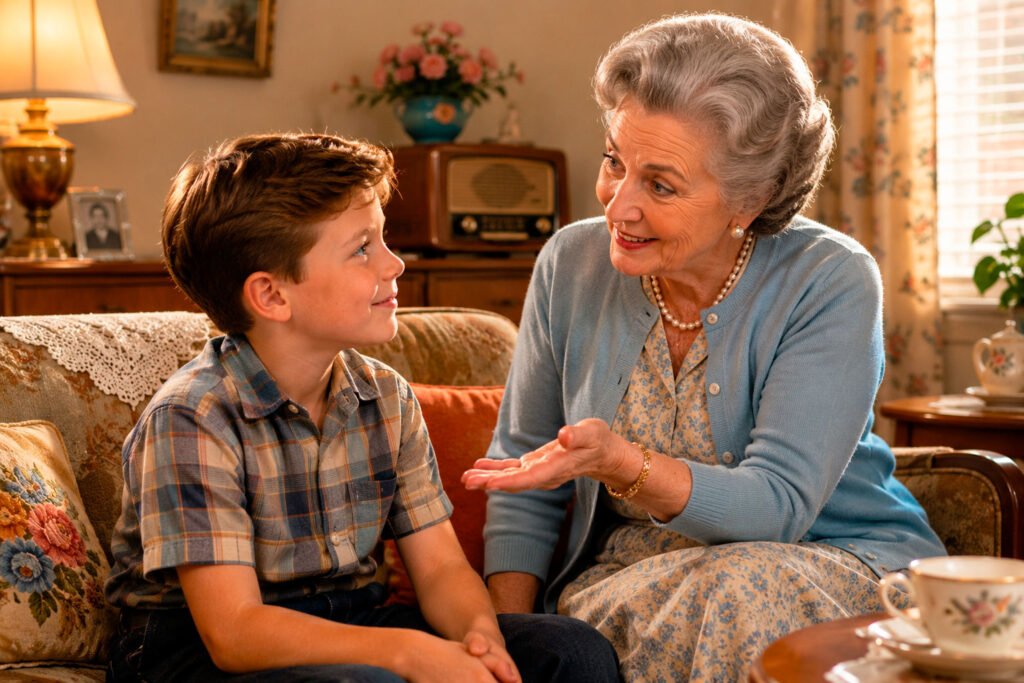
My grandmother saw me fighting with my brother and pulled me aside. Your brother will win any fight you pick with him, she said. He’s bigger and stronger. But you’ve got the brains to outsmart him — if you’re willing to use them. So don’t fight him. Outsmart him.
I was maybe eight. I remember thinking, even then: she’s really smart. It took me sixty years to find the better word. That wasn’t smart. That was wisdom.
Her name was Bessie Stone. She was a registered nurse who’d helped run her husband’s medical practice — he’d been the only surgeon in Western Michigan during World War II, when everyone else had gone off to war — and then he died at 47, and she raised three girls alone. She’d grown up with six siblings and a stepbrother in a house that, by her account, was its own kind of chaos. By the time she sat me down about my brother, she’d already survived enough of life to know exactly which battles are worth fighting and which ones are a waste of your one good asset.
I didn’t know any of that backstory when she gave me the advice. I just knew it landed differently than the advice I got from most adults.
I’ve been asking all year — since I launched this inquiry into what wisdom actually is — where the stuff first comes from. Not the dictionary definition. The recognition of it. When do you first clock that a thing someone said wasn’t just true, but wise, and somehow different in kind from the other true things people tell you?
For me, it wasn’t just Bessie. It was a pattern, once I went looking for it.
It was my stepmother’s family — six siblings, four of them Lutheran ministers — who’d show up on my dad’s boat and, having silently agreed to avoid politics because they disagreed on everything, would argue about theology instead. Same denomination, roughly the same seminaries, and they still couldn’t agree. I was a kid watching grown men trained in the identical tradition arrive at completely different conclusions, and somehow doing it without rancor. I didn’t have language for what I was watching. I just knew it was different from how I’d been raised — by people who reacted to things fast, rather than people who considered things.
I’m writing this the weekend after we said goodbye to Mary, my step-mother, the one who brought, those four ministers, into my life in the first place. We celebrated her on Saturday. And Dan, the last of those uncles still with us, was there.
We talked. Not quite the way we used to on that boat — there was no one left to avoid disagreeing with — just two people who’ve both gotten older, comparing notes on what they’ve figured out and what they haven’t. I found myself watching him the way I watched all four of them when I was a kid, except now I had sixty more years on the clock and could finally see what I was looking at. I’ve asked him to be one of the first guests on the podcast that’s coming out of this whole inquiry. I want more of that conversation, on the record, before it’s no longer possible.
It was two scout leaders — not the scoutmaster, who was intimidating and a little untouchable, but two of the assistant leaders, the ones whose sons were my friends, who I’d actually go to when something was wrong. My own father never came to scouting. These two men, who owed me nothing, were just there — patient, thoughtful, the kind of attention that doesn’t perform itself.
None of these people was teaching me wisdom. They were just being it in my direction, and something in me knew to take notes.
I’m starting to think this might be the actual mechanism — not that wisdom is taught, but that it’s recognized, the way you recognize a face before you can describe it. You collect impressions of it in other people, years before you can say what the impressions have in common. And only decades later, usually after you’ve made every mistake the wise person was trying to spare you, do you look back and go: oh. That’s what that was.
There’s a version of this in the Bible that I read for the first time around that same age, in an “open Bible” my step-grandmother gave me — translations printed right in the text, so a confused kid could actually follow it. Solomon becomes king after his father David dies, and he panics. He goes into the temple and basically tells God: I am completely unequipped for this. And God’s response isn’t here’s the answer to every problem you’ll face. It’s: you asked for wisdom instead of wealth or power, so that’s what you’ll get.
What stuck with me wasn’t the wisdom itself — Solomon’s actual track record is, generously, mixed. It was that he knew enough to ask for the right thing. He could see, before he had it, what he was missing.
Which might be the test. Not whether you have wisdom. Whether you can recognize its absence in yourself, and want it anyway, more than you want to look competent, more than you want to win the fight.
I still remember every dumb, impulsive thing I’ve ever done far more vividly than any wise thing I’ve ever managed. That seems to be universal. Foolishness leaves a scar; wisdom mostly just leaves a feeling, faint and retrospective, that someone older saw something you couldn’t yet see. Maybe that’s where it starts — not in having it, but in being close enough to it, in someone else, to feel its outline.
So here’s where I’ll leave it, because I don’t have the answer yet — that’s rather the point of the next twelve months:
Where were your first impressions of wisdom? Who gave you one, before you had the language to know that’s what it was?
Shine,

Subscribe to the Newsletter
Join Max J Miller Blog and receive new online content directly in your inbox.
Recommended for Your Journey
Discover more inspiring reads that support your journey toward growth, purpose, and emotional well-being.

[060] When the Writing Discovers Something the Writer Didn’t Know
- Max J Miller
[046] Finding My Voice by Losing It First
- Max J Miller

[038] When the Teacher Becomes the Student (Again)
- Max J Miller
[055] The Good: When the Meaning Changes, Everything Changes
- Max J Miller
[040] The Books I Actually Finish (And Why That Matters)
- Max J Miller

[013] – Men, Loneliness, and the Power We’re Not UsingWe’re Not Using
- Max J Miller