Story #065
What Is Wisdom to You?

Max J Miller

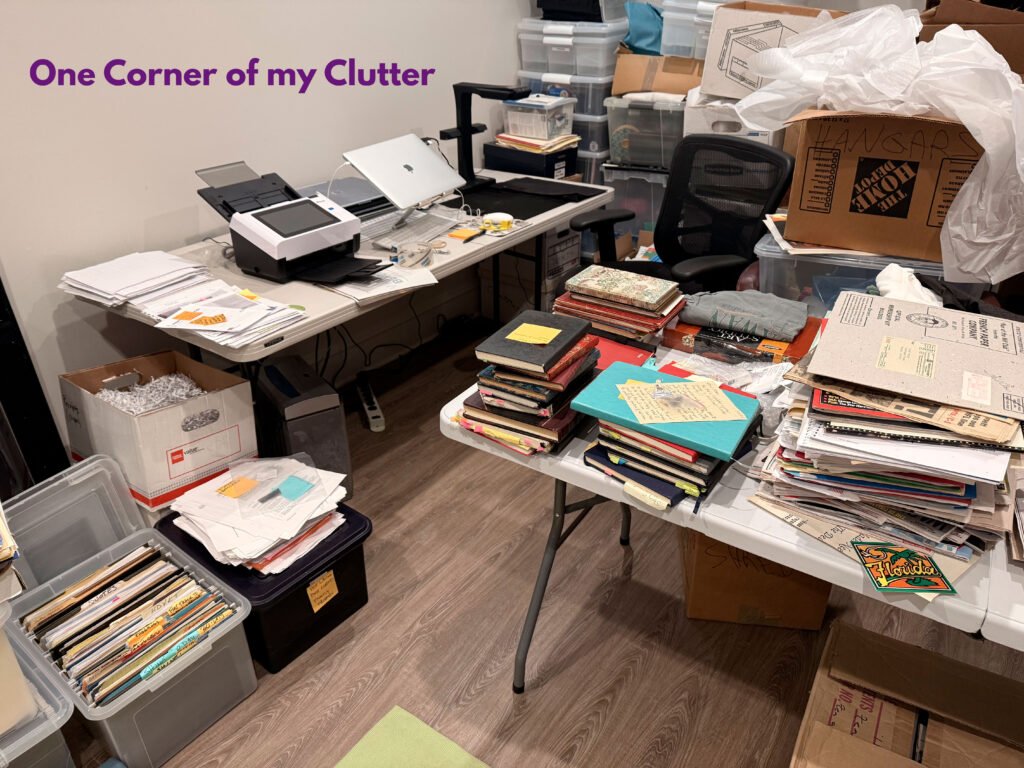
I’ve been going through my stuff lately. A lot of stuff. Books, papers, mementos, digital files — the accumulated sediment of a life that, when you actually stop and look at it, turns out to be staggering. Closets and folders and drawers full of things I’ve been carrying around, in some cases, for decades.
For a long time, my relationship to all of it followed a familiar shape: I’d pick something up, turn it over, feel the pull of but what if I need this someday — and put it right back where it was. Multiply that by a few thousand objects and a few hundred thousand files, and you get a kind of paralysis. Not hoarding, exactly. More like an impasse. A low hum of I’ll deal with this later that never quite resolves.
What finally broke the impasse wasn’t a system. It was a question.
I started asking: for any given thing, which of these is most important? Not do I need this — that question is unanswerable, because the honest answer to “might I need this someday” is almost always maybe. But which is most important is a different kind of question entirely. It doesn’t ask me to predict the future. It asks me to choose, right now, in this moment, what matters more. It’s a variation on my binary decision method.
And here’s the strange thing: once I started asking it, the answers came. Not always instantly, and not always easily — but they came. Slowly, I’ve been letting go. Of objects, mostly, so far. But also, I’m noticing an opening to letting go of something else.
Because the question doesn’t stay confined to closets. Once you start asking which of these is most important about your possessions, you can’t help but start asking it about your time. Your attention. Your relationships. Your worries. The argument you’re still replaying in your head from three days ago — is that, really, the most important thing available to you right now?
I didn’t expect a question about my bookshelves to start asking itself about my mind. But that’s the thing about good questions — they don’t stay where you put them. And lately, this one has wandered into territory I didn’t plan for. It’s started asking itself about a much bigger pile than the one in my closet: the accumulated stuff of a lifetime spent thinking about wisdom, without ever quite pinning down what the word means.
So here’s where I want to spend the rest of this year. I want to ask, openly and without much hope of arriving at a tidy answer: what is wisdom?
I realize that’s a strange thing to admit, given the name of this newsletter. You’d think I’d have a working definition by now, sixty-four issues into Wisdom Wayfinder. But the truth is, the closer I look at the word, the slipperier it gets. Wisdom turns out to be one of those words — like “quality,” like “love,” like “justice” — that everyone recognizes and nobody can quite pin down. We know it when we encounter it. We know its absence, too, often more clearly than its presence. But ask someone to define it, and watch the sentence trail off into gesture.
I don’t think that’s a failure of language. I think it might be a clue.
A friend pointed out to me recently — a little wryly — that if I’m calling this newsletter The Wisdom Wayfinder, the obvious question is: what does wisdom mean to you? Fair enough. So that’s the question I want to spend this year actually answering — not with a definition, but with an inquiry. An ongoing one. I’ll be bringing other people into it too, in conversations I’m recording for a project I’ll say more about soon. But I want to start here, with what I’ve found so far.
The first thing I’ve found is this: wisdom isn’t something you believe. It’s something you do.
I’ve been reading Stephen Batchelor’s writing on the Buddha’s Four Ennobling Truths — and what strikes me most is his insistence that they were never meant to be doctrines. They’re not propositions to accept. They’re more like instructions. Verbs disguised as nouns.
Take the first one. Most of us hear “life is suffering” and take it as a statement about reality—a kind of cosmic verdict. But Batchelor reads it differently: the instruction isn’t believe that life is suffering. It’s recognize the suffering that’s already here. Don’t look away from it. Don’t explain it away. Just see it.
That’s not a belief. That’s a practice. It’s the same kind of move as my closet, actually — not figure out the right answer about whether you’ll need this someday, but look at what’s actually in front of you, right now, and respond to it honestly.
The second truth points to the source of that suffering — our clinging, our attachment — and the instruction is to let go of it. Loosen the grip. Release what’s generating the grasping.
And here’s where it gets interesting to me. The third truth is the realization of cessation — the actual ending of that suffering, once its source is released. Tradition calls this Nirvana. And I think this is where so much gets lost in translation, because we tend to imagine Nirvana as a faraway destination — somewhere out there, permanent, attained once and held onto forever, not unlike the way many of us picture heaven.
But what if it’s not a place you arrive at once and for all? What if it’s something closer at hand — realized again and again, each time we actually let go of what we’re clinging to?
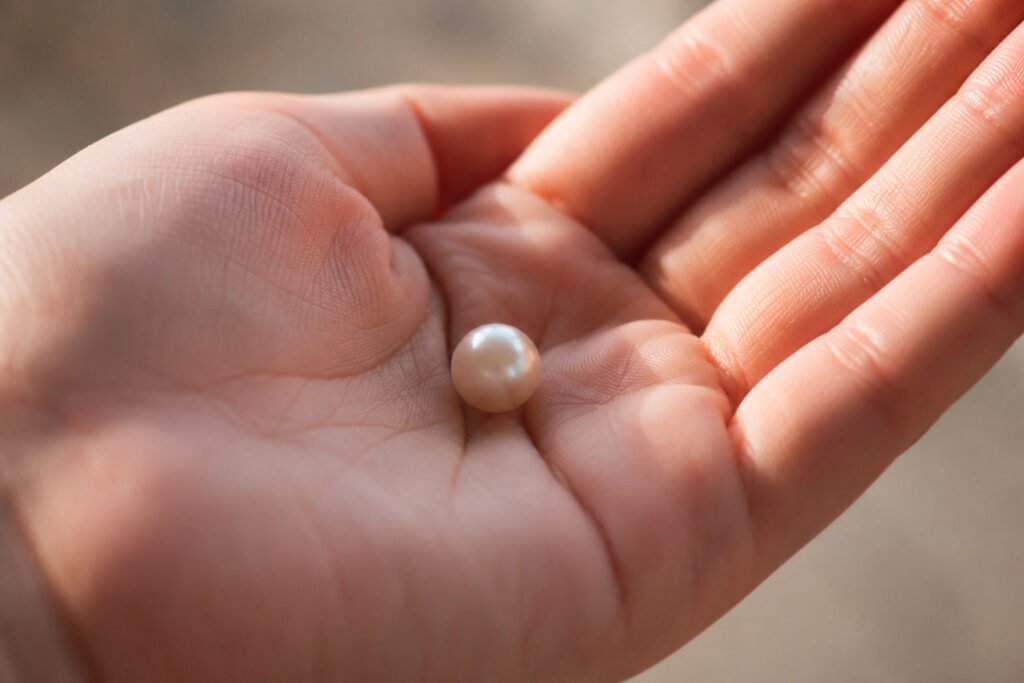
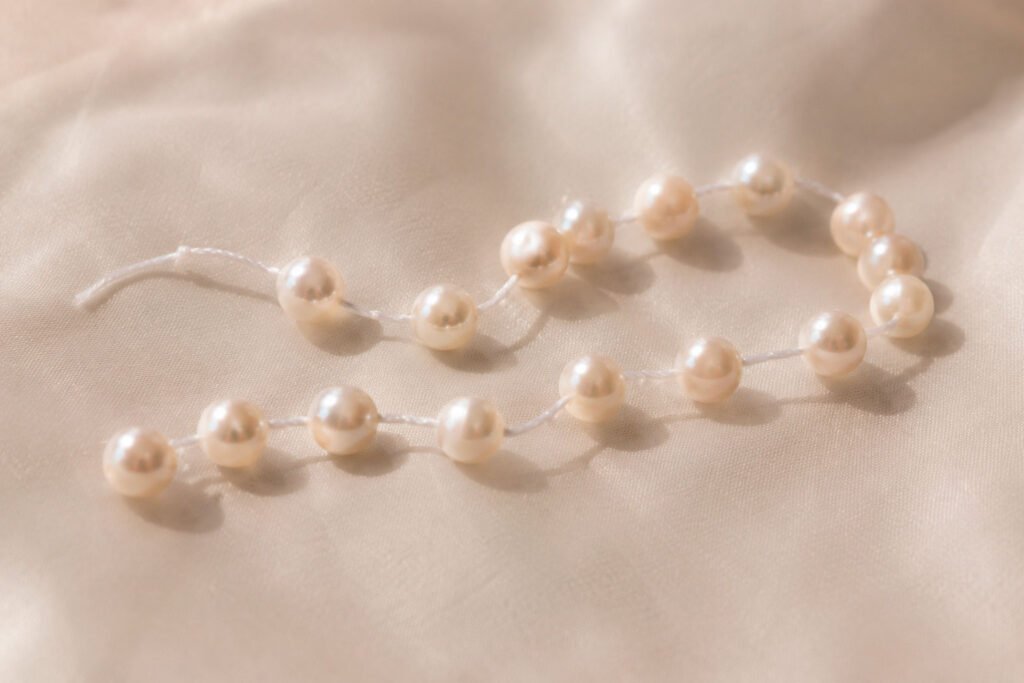
I find myself picturing it like a pearl. Not a permanent state you achieve and keep, but a complete, luminous thing in itself — a moment of release, fully itself when it happens. (This is my image, not Batchelor’s — but it’s how I’ve come to hold it.) And the fourth truth — the path — isn’t a method for reaching some final state. It’s the cultivation of this whole way of seeing and releasing, again and again, over a lifetime. I think of it as stringing those pearl moments together. One at a time. Threading them into something that accumulates — a practice, a life, a kind of necklace made of moments when you let go and, briefly, were free.
There’s one more piece I keep coming back to, and it has to do with what these pearl-moments actually feel like from the inside.
In my experience, the moments when I most clearly let go — when something I’d been gripping simply releases — are almost never moments of getting something for myself. They’re moments of giving. A flash of real compassion for someone, where for just a second there’s no calculation, no “what’s in this for me,” no transaction at all. Just presence, given freely. Those moments feel like relief. Like something exhales. And I think that’s not a coincidence — I think compassion and release might be two names for the same experience, seen from different angles.
Which brings me back to my closet.
I started this piece by telling you about a small, almost embarrassingly mundane practice: asking, of the things piled up around me, which of these is most important? I called it a question that breaks an impasse. But I think it’s something more than that now. Every time I actually let something go — not because I figured out I’d never need it, but because I chose, in that moment, what mattered more — there’s a small version of that exhale. A small pearl.
I don’t think wisdom is a destination any of us arrive at. I think it might just be this: the recurring, practiced willingness to see clearly what’s in front of us, to release our grip on what we’re clinging to, and to notice — every time we do — that something in us breathes a little easier.
That’s where I’m starting this year’s inquiry. Not with an answer, but with a question I plan to keep asking, in this newsletter and in conversations with people whose lives have taught them things mine hasn’t: what is wisdom to you?
I’d love to know what you think it is, too.
This piece marks the start of something I’ll be returning to all year — and I won’t pretend to know where it leads.
Before you go, sit with this for a moment:
If wisdom isn’t a destination but a recurring moment of release — a pearl, recognized again and again — when was the last time you felt one? And what were you letting go of when it happened?
Shine,

Subscribe to the Newsletter
Join Max J Miller Blog and receive new online content directly in your inbox.
Recommended for Your Journey
Discover more inspiring reads that support your journey toward growth, purpose, and emotional well-being.
[059] Hangry in Devon: How My Friends Caught Me When I Broke Unity
- Max J Miller
[061] The elders the culture has been missing
- Max J Miller
[006] – Climbing Jacob’s Ladder
- Max J Miller

[013] – Men, Loneliness, and the Power We’re Not UsingWe’re Not Using
- Max J Miller

[019] – Are You Hiding Your Superpowers Behind a Mask?
- Max J Miller
[003] – Question Everything
- Max J Miller