
Story #065
Beyond Optimism: A Third Act Credo
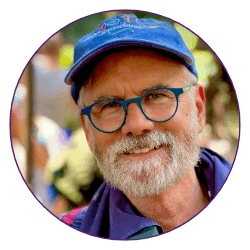
Max J Miller

On planting seeds of wisdom in uncertain times — and why depth was always the point
There is a scene in The Lord of the Rings that has been living rent-free in my head lately. The kingdom is being overrun. The enemy has breached the walls. And in the middle of the chaos, one of the Fellowship quietly kneels down and begins digging a hole in the ground.
“What are you doing?” someone demands.
“Planting a seed,” he says.
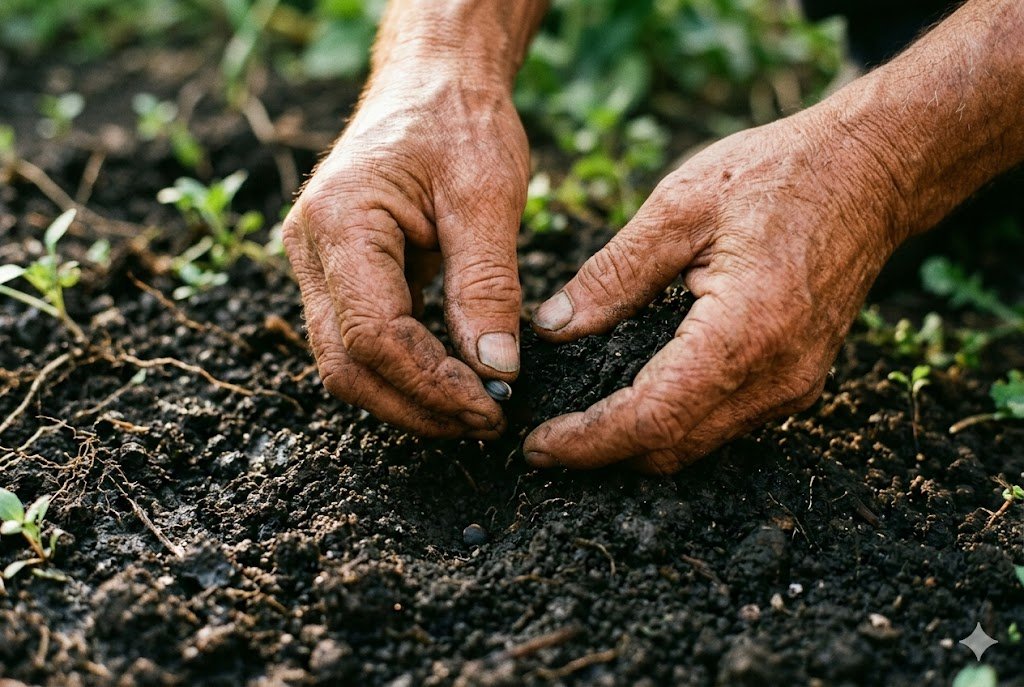
I’ve been that man lately — at least in my imagination. Not because I’ve given up, but because something in me has shifted about what faithfulness actually looks like in a time like this.
I’ll be honest with you. I was raised on optimism. Not the shallow, motivational-poster kind — the bone-deep, American, anything-is-possible kind that my parents handed me like a birthright. For most of my life, I’ve carried it without question. But lately, that optimism has frayed. I look around at the culture I thought I understood, and I see things that the optimist in me doesn’t quite know what to do with.
I was sitting with my long-time colleague and intellectual sparring partner, John King, this week — one of those wide-ranging conversations we fall into, the kind that starts somewhere ordinary and ends up somewhere you didn’t expect. And somewhere in the middle of it, I heard myself say out loud what I’d been circling around for months: I think we’re in the midst of a cultural meltdown. And I think it’s going to get worse before it gets better.
Saying it out loud didn’t depress me. Strangely, it clarified something.
Because the next thing I heard myself say was: I’m not building anymore. I’m planting seeds.
There is something almost countercultural about that phrase — planting seeds — in the world we inhabit. We live in a civilization that measures everything by scale. Growth. Reach. Impact. Metrics. We are conditioned, almost from birth, to ask: How big can this get? Even our spiritual and wisdom traditions, the moment they touch the marketplace, get asked the same question. How many subscribers? How many downloads? How many lives changed — and can you quantify that?
I’ve asked those questions of myself. I won’t pretend otherwise.
But John said something in our conversation that stopped me cold. He said: Deeper, not wider.
Three words. And something in me went quiet.
Because I realized I had been unconsciously treating depth and scale as if they were on the same road — just different speeds. They’re not. They’re different roads entirely.
Scale asks: how many?
Depth asks: how fully?
Scale wants to know your reach. Depth wants to know your roots.
The wisdom traditions knew this. Buddha worked with five disciples. Jesus with twelve. Neither of them, as far as we know, ever asked anyone to like and subscribe.
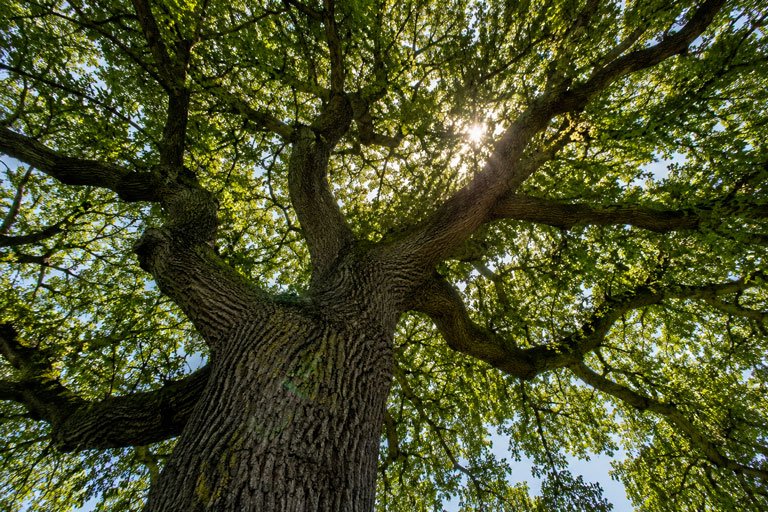
I’m not against scale. There’s a time for everything, as Ecclesiastes reminds us — a time to sow and a time to reap, a time to cast away and a time to gather. But I’ve been paying attention to what this particular season seems to be asking of me. And what I keep hearing is: go deeper. Find the handful of people who are genuinely ready to do the inner work. Sit with them long enough to actually see them. Plant something real.
Here is what I’ve come to believe about seeds: they are an act of faith that is almost aggressive in its defiance of despair. You don’t plant a seed because the conditions are ideal. You plant it in spite of the conditions — because you believe, against all visible evidence, that there will be a future worth growing into. The man in Tolkien’s story wasn’t naive. He knew the kingdom was falling. He planted anyway. That’s not optimism exactly. It’s something older and quieter than optimism. It might be the closest thing to wisdom I know.
My frayed optimism has not become pessimism. It has become something more like — faithfulness. A willingness to tend the small, the deep, the unglamorous work of transmission. Not broadcasting seeds to the wind and hoping something catches, but kneeling down, making a hole, putting something specific and living into the hands of someone specific and ready.
That is the work of the third act, I think. Not legacy as monument. Not legacy as scale. Legacy as seed.
So what does seed-planting actually look like? I’ve been asking myself that question with more seriousness lately, and here is what I keep coming back to.
Seeds of wisdom are not broadcast. They are placed. Carefully. Intentionally. Into prepared ground.
Which means the first question isn’t what do I have to give? It’s who is ready to receive it? Not who is the biggest audience, or the most impressive platform, or the most viral moment waiting to happen. But who, in your particular circle of life, is genuinely leaning in? Who is asking the questions that matter? Who has been cracked open enough by their own experience to be receptive to something beyond information — something that might actually change them
Those are your people. They may be fewer than you’d like. They may surprise you with who they are. Two of my newest clients are around fifty — not the demographic I imagined I was writing for. But they showed up. They leaned in. The ground was ready.
And the seeds themselves — what are they, exactly? I’ve come to believe they are three things, woven together: wisdom, virtue, and presence. Not as abstractions, but as lived, embodied realities that one human being transmits to another. And the primary vehicle for all three — the one that has carried them across every culture and every century — is the story.
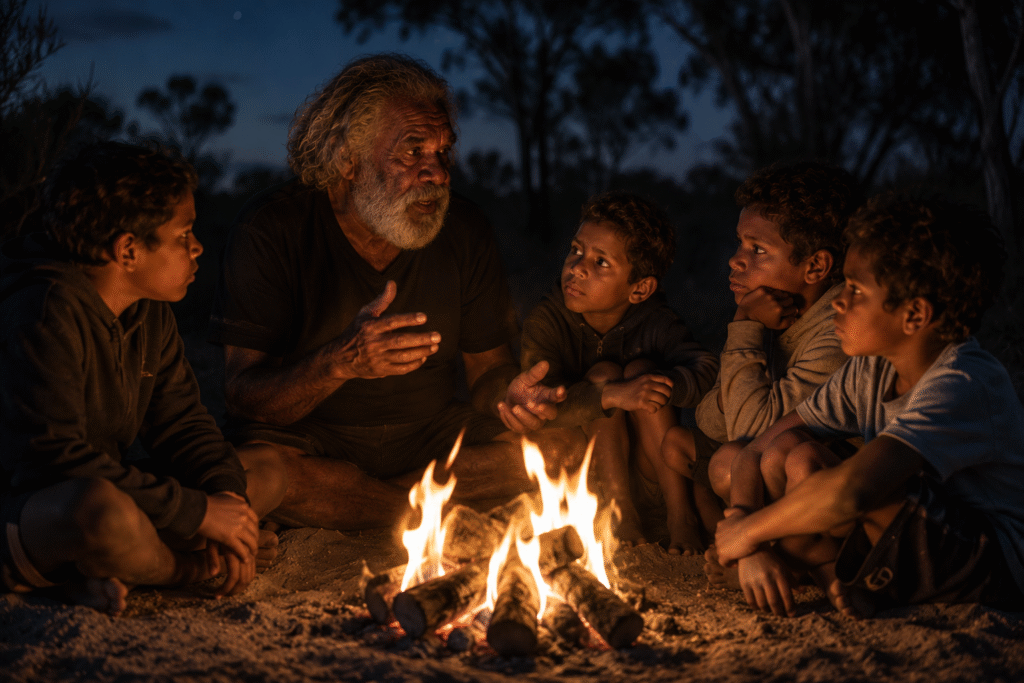
Not the polished keynote. Not the carefully curated highlight reel of a life well-lived. The real story. The one that includes the wrong turns, the humbling failures, the moments when you didn’t know what you were doing and did it anyway. Those are the seeds with the most life in them. Because the person receiving them doesn’t just hear a lesson — they recognize themselves. They feel less alone in their own struggle. They catch a glimpse of what’s possible on the other side of their particular darkness.
This is what the elders always did, before we forgot to ask them. They didn’t lecture. They gathered people close, and they told the truth about their lives. And something passed between them — call it wisdom, call it grace, call it the living thread of human experience — that no algorithm can replicate and no platform can scale.
You don’t need a large audience for this. You need a willing one.
You don’t need the perfect conditions. You need the willingness to kneel down, even while the kingdom is loud and uncertain around you, and put something living into the ground.
The harvest is not your department. The planting is.
A note: this piece was sparked by a conversation with my long-time colleague and intellectual sparring partner, John King. The best ideas rarely arrive alone.
As you go into your week, I invite you to sit with this.
If your legacy were a garden rather than a monument — something living, tended, and passed on rather than built and displayed — what would you choose to grow? And who would you want to grow it with?
Shine,

Subscribe to the Newsletter
Join Max J Miller Blog and receive new online content directly in your inbox.
Recommended for Your Journey
Discover more inspiring reads that support your journey toward growth, purpose, and emotional well-being.
[033] Living the Questions: My Spiritual Story Begins
- Max J Miller
[029] Alignment: Finding Common Ground Without Agreement
- Max J Miller
[022] – Thriving in Our Third Act: The Aspirations Series Begins
- Max J Miller
[040] The Books I Actually Finish (And Why That Matters)
- Max J Miller

[076] Is “soul” too much? (You tell me.)
- Max J Miller

[063] The Book in You
- Max J Miller