
Story #009
Redemption in a Story

Max J Miller

The Edison of Entrepreneurship: A Legacy of Beautiful Failures
“The real rewards of building a business go far beyond the pride of accomplishment and even creating wealth; the greatest treasures of the journey are the friends you make, the lives you touch, and the person you become in the process.”
These words from my father, James D. Miller, have illuminated my path through decades of entrepreneurial ventures—each one a step toward an elusive lightbulb moment of my own.

My dad in his happy place (sailing)
The Spark of Inheritance
You know the story of Thomas Edison inventing the lightbulb. When a reporter asked him, “What’s it like to fail at something 1,000 times and keep going?” Edison’s response has become a proverb: “I didn’t fail 1,000 times. The lightbulb was an invention with 1,000 steps.”
I’ve come to realize I’m the Edison of Entrepreneurship, though it took me years to see my “failures” as merely steps on a longer journey. This perspective was my inheritance, passed down from a master of the craft.
My father was an entrepreneur of the first order. The spark in his eyes would ignite whenever he talked about his latest venture—a flicker of possibility that seemed to dance between caution and wild optimism.
He was always starting something new, his mind constantly illuminating pathways others couldn’t see. When he passed, it took a couple of years just to locate all the businesses that he had a stake in, little embers of his creative fire scattered across the economic landscape.
The First Flame
I was about seven or eight when he gave me my first taste of entrepreneurship—a simple cardboard box filled with firelighters and a matchbook. “People need this,” he said, his strong hand resting on my shoulder. “And they’ll pay for convenience. Remember that.”
Those summer evenings remain vivid in my memory. I would stand on a neighbor’s stoop, my small hands trembling slightly as I struck a match. The sulfur scent would fill my nostrils as I carefully lit one of those little paraffin blocks ablaze. The weight of the box under my arm grew lighter with each house I visited, a tangible measure of progress.
“Ring the doorbell,” I’d whisper to myself, gathering courage. When the door swung open, I’d launch into my rehearsed pitch: “You can save time and effort getting a fire started in your fireplace with these!”
The looks on their faces were a fascinating mixture of alarm, amusement, and bewilderment at what appeared to be a small child playing with fire on their doorstep. Often, they’d call the entire family over: “Martha! Come quick! You’ve got to see this!” Their laughter would echo across porches as they watched my demonstration, the firelighter casting dancing shadows across our faces.

“What are these made of?” they’d sometimes ask, leaning in to inspect my wares.
“I think cow manure mixed with paraffin and perfume,” I’d reply matter-of-factly, repeating what I’d overheard my father say. “Maybe sawdust too… I don’t really know… but they work!”
More often than not, they’d reach for their wallets—perhaps out of pity, perhaps out of genuine interest, or perhaps simply charmed by this miniature salesman with determination in his eyes. Each dollar bill felt like validation, cool and crisp in my eager palm.
The Flickering Years
Throughout my adolescence, I kindled various small ventures, each one teaching lessons I wasn’t yet wise enough to fully absorb. My father would listen to my grand plans over dinner, nodding thoughtfully, neither discouraging my ambitious schemes nor rescuing me from inevitable missteps.
“Light enough failures,” he once told me over a failed bicycle-modification enterprise, “and eventually, you’ll see your way forward.”
The Blackout
Then came the first true darkness. My freshman year in college, my father’s main business went into bankruptcy—a light extinguished after years of brilliant burning. The news arrived via a collect call, my father’s voice uncharacteristically dim. “You’ll need to handle tuition yourself,” he said simply. No apology, no despair; just a fact to be faced.
I hung up the phone and stared out my dorm window at the campus lights blinking on at dusk. For the first time, I felt truly alone.
It was the peak of the ‘energy crisis,’ when oil prices soared and Americans suddenly discovered the virtue of conservation. An acquaintance named Mike approached me with an idea. “People are desperate to save on heating bills,” he said. “We could start an insulation business.”
With nothing but determination and a borrowed truck with peeling paint, we launched our venture. We knew nothing about insulation beyond what we could learn from a dog-eared manual and a weekend talking to suppliers. Our equipment consisted of secondhand tools and rented machinery that frequently jammed.
For a brief, dazzling moment, it seemed we might succeed. Orders came in faster than we could fulfill them. We worked sunrise to sunset, our clothes perpetually dusted with chemicals that made our skin itch even after multiple showers.
“We’re going to make it,” Mike said one evening as we added the day’s checks under the truck’s dome light.
The universe had other plans. Within a month, our truck’s engine blew a head gasket in a spectacular cloud of steam on the interstate. The repair cost wiped out our savings. Then came the ceiling incident.
I can still hear the splintering crack as Mike’s foot broke through an attic floor, followed by the thunderous crash as he plummeted through the ceiling, landing squarely on an oak dining room table where a family had been eating breakfast moments before. The silence afterward was deafening, broken only by the gentle tinkling of plaster dust settling on the glass table top.
The homeowners stared at us, their faces transitioning from shock to fury. We avoided a lawsuit when they realized we didn’t own anything of value (including our company). But the light of our entrepreneurial dream had been extinguished.
I dropped out of school for a year and moved in with a friend from church. I slept in her grown-up son’s childhood bedroom, where I lay awake nights staring at the glow-in-the-dark stars on the ceiling. Their faint green luminescence seemed to mock my situation.
Reignition
“Every failed circuit teaches you something,” my father said during a pre-dawn phone call as I sat in the kitchen, the overhead light creating a small island of brightness in the dark house. “Edison didn’t just try the same thing 1,000 times. He learned from each attempt.”
So I held various jobs—hardware store clerk by day, restaurant dishwasher by night—my hands constantly wet, calloused, or both. But in stolen moments, I plotted my next venture, jotting ideas on soggy napkins and the backs of receipts.
The Constellation of Attempts
Reflecting on my life, I can account for over a dozen ventures I’ve started—none of which exist today. Each one shines in my memory like a star in a personal constellation of attempts:
A coupon book company that inspired a well-funded competitor who crushed us (and still flourishes today)
A security alarm distributor for a company that turned out to be anything but reliable
A portable espresso bar for events that was so labor-intensive, a part-time job would be more profitable
A DIY website-building software company when people were still skeptical about the ‘interwebs.’
While I’ve found my creative light in theater, theme park design, and writing, I long thought my entrepreneurial career had been an agonizing series of failures—each one a bulb that burned too briefly before going dark.
The Illumination
Only recently have I recognized that what I perceived as failures were actually the 1,000 steps Edison spoke about. Looking back, I see the patterns, the missteps, the moments when I failed to insulate my ventures against predictable risks or when I let my enthusiasm outshine my planning.
I’m not quite sure if I’ve reached Edison’s 1,000 steps yet (his to building a working lightbulb; mine to building a thriving business). But one thing I’m certain of: I’ve grown. My drama teacher once said, “Anyone who can’t look back upon his life and see himself as a fool hasn’t grown.” By that measure, I’ve grown immeasurably.
Though my father has been gone for 25 years, the light of his wisdom still burns brightly in my heart. His hard-earned perspective, like the ‘boon’ brought back home from a hero’s journey, redeems all the losses and struggles of my adventures.
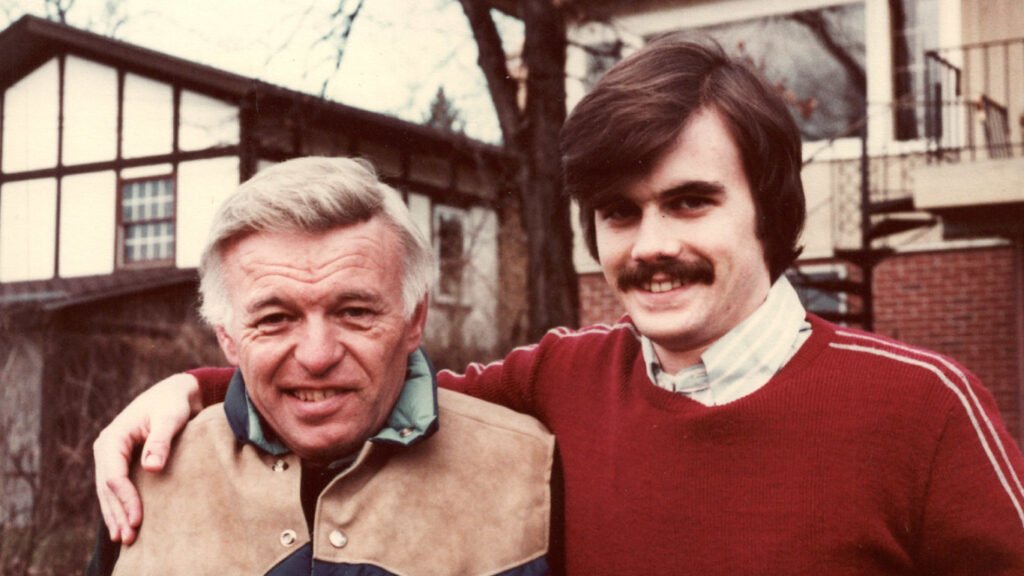
My dad an me (That 70s mustache is back again)
I now understand what he meant about the rewards beyond accomplishment and wealth. Each venture connected me with remarkable people, allowed me to touch lives in unexpected ways, and sculpted me into the person I am today. Every “failure” was actually a filament, necessary for the eventual light to appear.
Thank you, Dad. Your adventures continue to illuminate my path.

Your Story as Your Boon
In my “Edison of Entrepreneurship” story above, I mention how my father’s “hard-earned perspective, like the ‘boon’ brought back home from a hero’s journey, redeems all the losses and struggles of our adventures.”
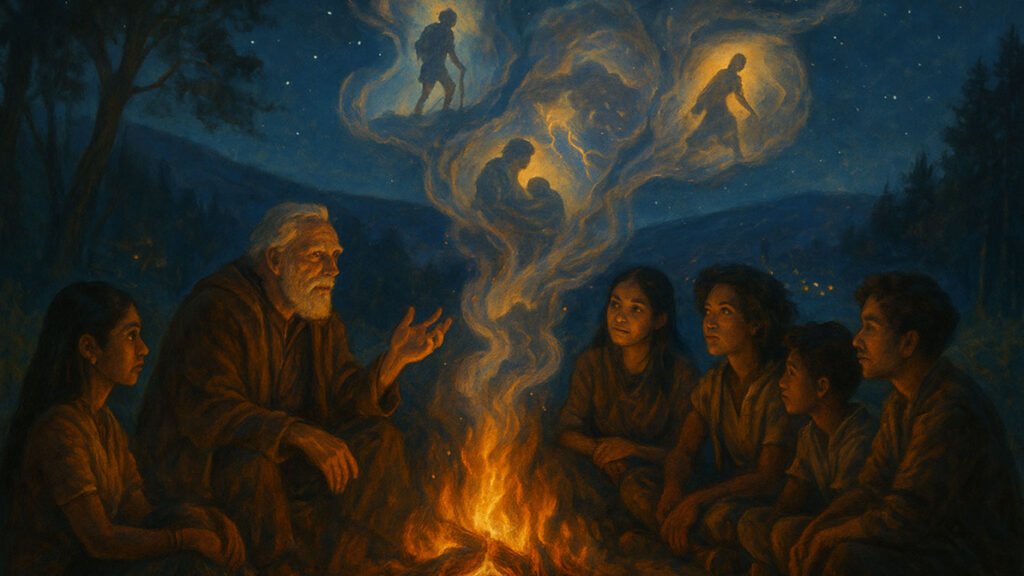
Joseph Campbell’s concept of the “boon” is a profound and often misunderstood element of the Hero’s Journey. The boon isn’t just a treasure or prize. It’s a gift of transformation that the hero brings back from their journey, meant to benefit the community or world they left behind.
The boon represents the integration of wisdom, healing, or power gained through struggle. It’s the medicine distilled from suffering, the light brought back from the underworld, the truth that transforms not only the hero but the tribe.
In many ways, the boon we have to offer to our communities are the stories we distil from our life adventures and struggles.
Our stories share key traits of the boons of legendary heroes:
They are earned through ordeal.
They represent inner growth or realization.
They have communal value; they’re meant to be shared.
Sometimes, they’re resisted or misunderstood by society.
Glance through these examples of boons from well-known adventures:
1. The Lord of the Rings – Frodo’s Wisdom and the Destruction of the Ring
Boon: The destruction of the Ring saves Middle-earth from darkness, but Frodo also returns with deep spiritual insight—and trauma—that ultimately cannot be contained in the Shire.
Value to others: Peace, restoration, and the survival of free peoples.
Note: Frodo cannot reintegrate; the boon benefits the world, but he must leave it behind.
Emotional, right? You feel both the aspiration (having a child) and the heartbreaking struggle of loss. Six words, and suddenly you’re reaching for tissues.
2. Harry Potter (esp. Book 7) – Willingness to Die for Others
Boon: Harry’s act of self-sacrifice breaks Voldemort’s power over others.
Value to others: Liberation from tyranny, restoration of love and community.
Note: The boon is moral clarity and the triumph of love over fear.
3. The Lion King – Simba’s Return and Claiming of Identity
Boon: Simba reclaims his place as king, restoring the balance to the Pride Lands.
Value to others: Renewal of the land and leadership; he brings back the rain—literally and symbolically.
Note: The boon is tied to self-acceptance and reclaiming responsibility.
4. The Matrix – Neo’s Awakening as “The One”
Boon: Neo returns to the Matrix fully awakened, now able to manipulate its code and free others.
Value to others: Hope, empowerment, and the beginning of liberation.
Note: The boon is both power and vision—the ability to see the system for what it is.
5. Moana – Restoring the Heart of Te Fiti
Boon: Moana brings back the heart, which she has retrieved by understanding the true nature of “the monster” (Te Kā).
Value to others: Life returns to the islands; the oceans are safe again.
Note: The boon is healing through understanding rather than conquest.
6. Odysseus (The Odyssey) – Cunning and Endurance
Boon: Odysseus brings back not only his physical return but hard-won insight into loyalty, patience, and humility.
Value to others: His household and kingdom are restored; justice is served.
Note: The boon is personal growth, which allows re-integration.
7. Prometheus (Greek Myth) – Fire
Boon: Stolen fire from the gods.
Value to others: The dawn of civilization, creativity, and knowledge.
Note: The boon comes at great personal cost—eternal punishment.
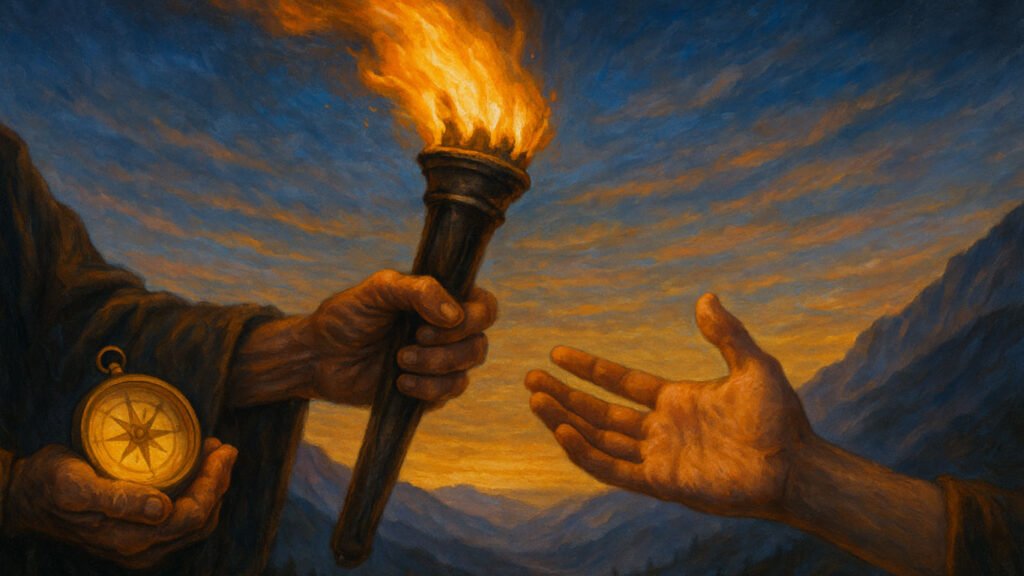
Whether you seek to pass on a legacy by sharing your story or merely seek meaning and fulfillment in your “Third Act” by reflecting on your life journey, the boon is a metaphor for what you’ve gained through hardship that is now meant to be given back. It includes:
The wisdom hard-won through grief.
The courage refined through failure.
The love deepened by loss.
The insight forged through illness or spiritual inquiry.
The power of a boon emerges in sharing it. So it is with your story.
If you missed it, I recommend you return to last week’s Wayfinder, where I gave a simple formula for capturing your life wisdom in stories. (Issue [008] Thriving in Our Third Act: Make ‘Em Laugh, Make ‘Em Cry, Make ‘Em Cheer!)

Old Folks Should Step Aside
There’s a popular notion floating around boardrooms, tech startups, and family dinner tables alike: that older folks should quietly bow out and make way for younger leaders. “It’s their turn,” the thinking goes. “Time to pass the torch.”
Now, I’m all for giving young people the microphone—but let’s not throw the amp out with the speakers.
Because here’s what often gets overlooked: the torch only lights the way when it’s passed along with the wisdom of how not to burn the place down.
Our elders carry the long view. They’ve seen cycles repeat, values tested, empires rise and fall (and fizzle into group chats). They’ve endured ego-driven leadership—both theirs and others—and have, in many cases, earned their scar tissue. That experience doesn’t make them obsolete. It makes them essential.
Of course, the form of leadership may shift. Maybe it’s not about commanding from the front anymore. Maybe the elder leads by listening deeply, by naming the pattern others don’t yet see, or by asking the one question that cuts through the noise. Maybe leadership in later life isn’t about grabbing the wheel; it’s about pointing out the cliff no one else sees coming.
Cultures that thrive over time are cultures that honor the elder not for their authority, but for their hard-won discernment.
While youth brings energy, elders bring pattern recognition, historical context, and soul-deep understanding. The most generative societies honor both.
So yes, let the younger generation step forward. Just don’t mistake stepping aside for disappearing. We need our elders in the circle, in the conversation, in the story. Their boon is our ballast.
As for the notion that our senior sages should simply step aside…
That’s an idea worth shredding.
Cheers,

P.S. Can your failures illuminate the way for others? Hit reply, and tell me how you might share what you’ve learned.
P.P.S. Who do you know that has life wisdom to share? Do me a huge favor and forward this Wayfinder to him or her.
P.P.P.S. Want to learn the secrets of connecting emotionally through storytelling? Join the waitlist for my next storytelling workshop. Click here.
Subscribe to the Newsletter
Join Max J Miller Blog and receive new online content directly in your inbox.
Recommended for Your Journey
Discover more inspiring reads that support your journey toward growth, purpose, and emotional well-being.

[077] Field notes on what a life is for
- Max J Miller

[065] What Is Wisdom to You?
- Max J Miller
[051] The First Gift of the Wisdom Keeper: Listening to Your Life
- Max J Miller

[045] The Most Important Thing Wisdom Keepers Can Do Right Now
- Max J Miller

[014] – You’re Not Lost, Just Waiting to Be Brave
- Max J Miller

[064] Beyond Optimism: A Third Act Credo
- Max J Miller