
Story #011
Why Writing Advice is Mostly Wrong

Max J Miller

Why I Keep Asking Your Feedback
Mark Twain added an interesting postscript to a letter:
“I apologize for this long letter; I didn’t have time to write a shorter one.”
Twain’s remark speaks volumes about the writing process. Writing often starts messy (and long), and after several edits, it becomes coherent and simpler (shorter).
Last week, I shared a ‘first pass’ at a purpose statement for The Wisdom Wayfinder and I requested your thoughts and reactions. I sincerely appreciate all the feedback I received.
A few readers mentioned that my purpose statement was too long. It was indeed.
It was a ‘first pass’ and Twain’s comment applies. It’s not that I didn’t have time to edit it. Instead, I didn’t take the time to create a clear context.
I wanted to learn which parts of the purpose statement resonated with you and why. In retrospect, my request was unclear.
I’ve reproduced the purpose statement in this edition below the PSs. I’d appreciate it if you’d take a moment to review it and send me a quick reply sharing which part(s) resonate with you.
I’m eating my own dog food here (again). I encourage my writing and storytelling clients to share their work promptly before refining and revising it.
I instruct them to emphasize to their readers and listeners that this is a first, unedited draft and to be direct and specific about the kind of feedback they are looking for. You can ask, for example, “What feeling are you left with?” Or “Does this leave you confused or wanting to ask me a question?”
You’ll notice that I frequently ask for feedback. One of my writing mentors said, “Communication isn’t what you say, but what your listener hears.” I’m committed to connecting with my readers, and feedback makes that possible.
But, more to the heart of the matter, I’m up to something here that’s much bigger than me. Yes, I strive to be a better writer every day, but I do that in service of my greater purpose. I seek feedback to accelerate my progress in fulfilling that purpose.
“What are you up to?” You ask?
Humanity needs what our elder sages uniquely have to offer. Our untold life stories hold the keys to restoring humanness to our culture.
I believe our (mostly untold) stories are the leaves of the proverbial tree of life, which John asserted, “are for the healing of the nations.” (The Revelation of John, the last book of the Christian bible)
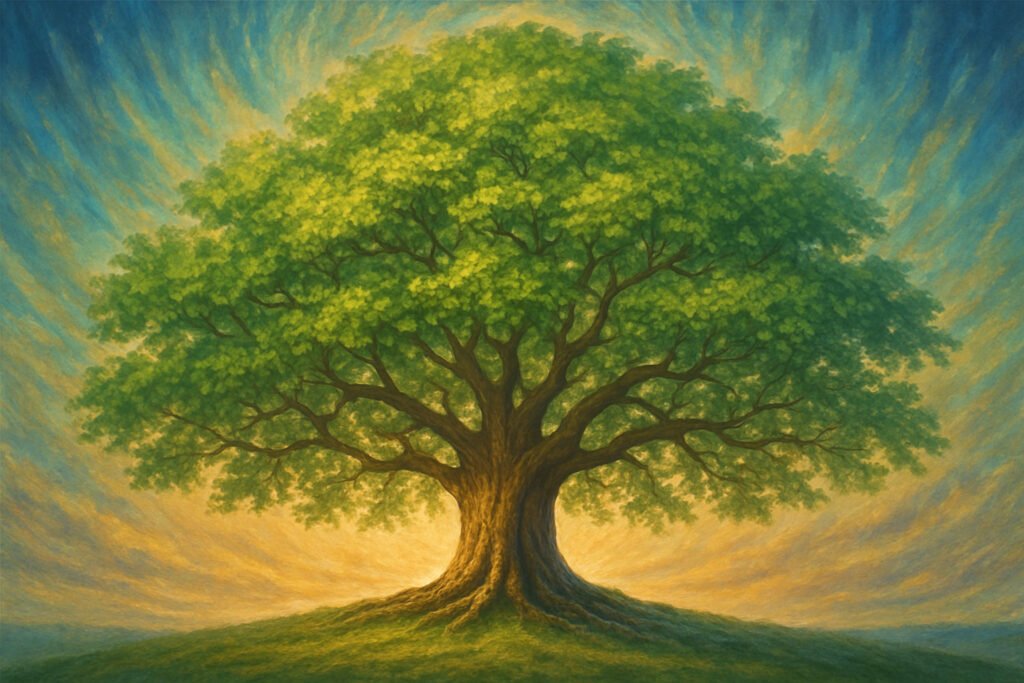
How do stories heal? We bond through stories. Stories build empathy. They give us a sense of meaning and they teach us to be compassionate with one another. That’s just the tip of the iceberg.
I want to inspire you, hidden sages, to trust that your life experiences can be distilled into golden seeds of wisdom to edify future generations. I want to encourage you to overcome your doubts and fears about being misunderstood, criticized, or judged.
So, I’m sharing my imperfect stories primarily as a way to engage and spark your memories and imagination. “That story reminds me of something that I went through.” I’ll be delighted to hear you say, “If that guy can do it, I can.”
How is that working? Are you confused, amused, inspired, or scared? Please let me know!
You may have seen my “In Search of…” story (below) in a previous iteration on social media. It shares my “lost and found” midlife crisis journey, which seems to resonate with many of my Boomer peers today.

When The Happiest Place on Earth Wasn’t Enough
At the peak of my career, my life looked like a scene from a dream: lavish, surreal, and larger than life. But behind the curtain, it felt like the opening act of a slow-burning nightmare, where the shadows were starting to creep in.
I was a Show Producer at Walt Disney Imagineering, leading teams of designers to create theme park attractions for the “Happiest Place on Earth.” And I was miserable.
I’m cruising down Mulholland Drive one morning to watch dailies at Deluxe in Hollywood. I’m approaching the famous scenic overlook you’ve seen in movies. It’s not quite as dramatic in the daytime–a large patch of gravel surrounded by a low hedge of bushes.

As I approach, I imagine speeding through those bushes off into eternity. The car behind me honks, and I’m jarred out of my reverie. I pull over, and a realization strikes me: I have this thought every week when I pass this exact spot. WTF? I wondered, How serious is this?
Over the next few days, I tried talking to friends about my feelings. They all seemed to think I was having a midlife crisis. I bristled at that cliche.
My favorite aunt chuckled at me and told me I was singing, “Is that all there is?” When I asked her what that meant, she said it was a song about struggling to find meaning in life. She said we all occasionally wrestle with feelings like that. Then she sang yet another old song to prove it: “What’s it all about, Alfie?” She said these songs were the mental soundtrack for many of our lives. Our conversation left me less hopeful of finding my way out of despair, but I appreciated her attempt to encourage me.
I read dozens of self-help books, took a series of courses recommended by a friend, and even sought out a therapist. My life took on a heightened sense of reality, as if I were living inside a movie. And I noticed that I had a soundtrack looping in my mind: U2’s ballad, “I still haven’t found what I’m looking for.”
My therapist had an intern, so I was outnumbered in the room. Speaking with friends, I referred to my therapists as “Thing One and Thing Two.”
I told my therapist about my moment on Mulholland Drive and asked him if he could help me find purpose and meaning. He immediately started asking about my work as an Imagineer. “How did you get to this place in your career?”
“Honestly,” I told him, “I can’t explain it. My career feels like I fell into a river and got carried away by the current. I’ve had an amazing life, by all accounts. I’ve traveled around the world and accomplished many things that I’m proud of. I have great friends, but it never seems to add up to anything. I feel like I made a wrong turn somewhere, and I can’t seem to course correct because I don’t know where I’m supposed to be going.”
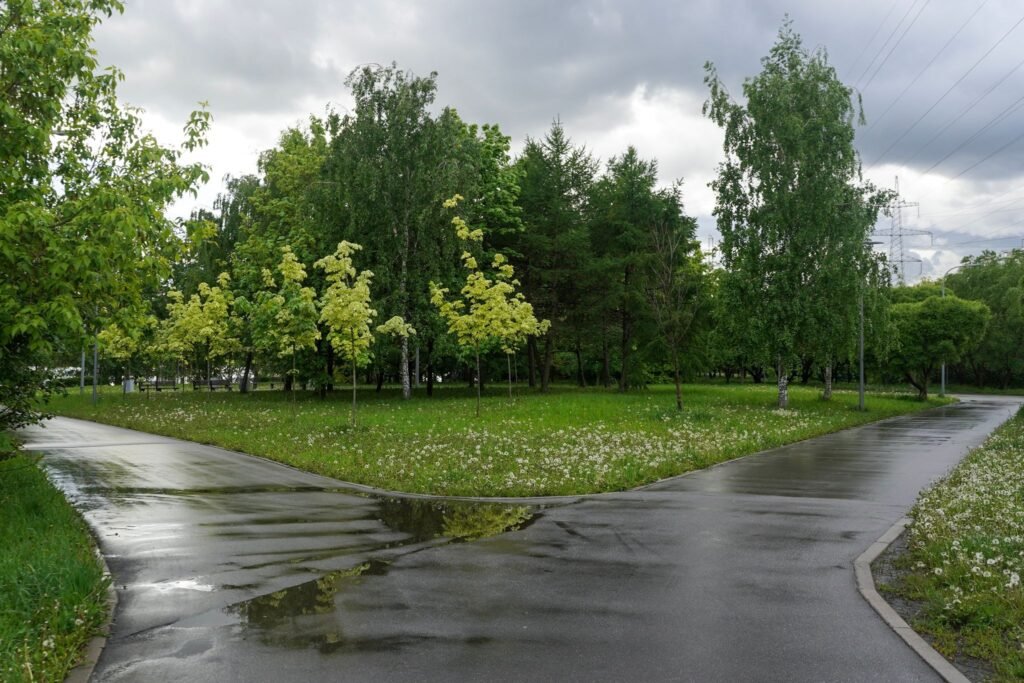
That was the beginning of a twenty-year journey of self-discovery and reinvention. In the words of another song on my inner hit parade, it was a “long and winding road.”
You’ve heard it said, “If you don’t have your health, you don’t have anything.” I feel the same principle applies to a sense of meaning in life. Viktor Frankl makes a clear case for this in his masterpiece, Man’s Search for Meaning.
When I shared a version of this story on social media a few months ago, many people commented with words of encouragement as if I was going through this crisis today. I’m not sure if that reflects more on my writing or the way people skim when reading social media posts.
But what grabbed my attention more than the misdirected comments of encouragement were the number of people who identified with the story. Many people have felt, or are currently feeling, adrift and at a loss for meaning.
It may seem odd, but that response was strangely satisfying. Sharing my struggles and having others feel like someone understands their challenges feels like success as a storyteller. And what could be more meaningful than leveraging one’s pain and struggle to bring relief to another person’s suffering.
Today, I‘m happy to report that I no longer feel adrift. Gratefully, I enjoy a clear sense of purpose, connection, and meaning in my days.
Don’t get me wrong. I still wander, but always with a sense of meaningful wonder.
I still write without knowing exactly where I’m going, but always with a sense of purpose: I help people feel known, understood, included, and valued.
I’m a storyteller.

Write What?
Every writing teacher has said it: “Write what you know.” It’s terrible advice.
What you know—in the sense of information—doesn’t move the dial for anyone.
Knowledge is overrated. Need to explain blockchain technology? AI can do that. Want historical context for the Civil War? AI delivers instantly. Researching medical procedures for your novel? AI has you covered. Today’s artificial intelligence can deliver facts, procedures, and processes faster and more accurately than any human writer.
AI can even articulate other people’s opinions, beliefs, and theories better than most of us can. Writing books and articles as pure information delivery? That’s passé.
Then why write, you ask?
Knowledge is what you’ve learned; experience is what you’ve lived, felt, and wrestled with. We write to connect with one another emotionally—that’s the only path to real impact.
Consider the difference: You could write an informational piece about divorce statistics, legal procedures, and psychological stages of separation. Or you could write about the moment you realized your marriage was over—standing in your kitchen at 2 AM, holding divorce papers while your coffee grew cold. Which piece would readers remember six months later?
Don’t write to inform. Write to inspire, excite, encourage, challenge, dare, exhort, and comfort. These are emotions you can evoke only through your story, your lived experience.
And here’s the beautiful paradox: write from curiosity and wonder. Delve into what you don’t know.
As Anne Lamott wrote in Bird by Bird:
“Writing has so much to give, so much to teach, so many surprises. That thing you had to force yourself to do—the actual act of writing—turns out to be the best part. It’s like discovering that while you thought you needed the tea ceremony for the caffeine, what you really needed was the tea ceremony. The act of writing turns out to be its own reward.”
If there’s a common theme among the most inspiring books on writing (from Lamott’s Bird by Bird to Annie Dillard’s The Writing Life) it’s this: We write to explore and discover. We write to make sense of what happened to us, what we felt, what we learned about ourselves and the world.
Even when writing about an actual event from our past, the act of putting words on paper uncovers new perspectives and meanings we never noticed while living through the experience. You don’t really know what an experience means until you’ve tried to share it. You literally make sense of your experiences by expressing them.
This makes writing a joyful process of discovery rather than a mechanical transfer of information.
So yes, write what you know, but redefine “know.” Know your struggles, your questions, your moments of wonder. Write what you’ve lived, not just what you’ve learned. Write about your experience, share your journey, tell your story.
“Write what you know”? That’s an idea worth shredding.
Cheers,

P.S. Please take a look at my “first pass” purpose statement for The Wisdom Wayfinder (below) and let me know what part of it speaks to you and how or why. You can do this by hitting ‘reply’ in your email reader and typing me a note.
Statement of Purpose for The Wisdom Wayfinder
1) Connect with thoughtful souls who sense there’s more to life beyond achievement and who long for depth, meaning, and authentic connection in this season of life.
2) Illuminate the common threads of our shared humanity—our triumphs, regrets, reinventions, and the inner gold buried in a lifetime of lived experience
3) Encourage each other to reclaim our stories—not as finished memoirs, but as living testaments still unfolding.
4) Inspire the generous act of legacy—not just leaving something behind, but living in a way that carries forward wisdom, character, and care for future generations.
5) Call forth the modern-day sages—men and women willing to offer not just their opinions, but their presence… to be carriers of wisdom in a culture starved for depth.
Subscribe to the Newsletter
Join Max J Miller Blog and receive new online content directly in your inbox.
Recommended for Your Journey
Discover more inspiring reads that support your journey toward growth, purpose, and emotional well-being.
[052] Integration: Revealing the Pattern of Your Life
- Max J Miller

[032] Ascend: Rising Above the Ugliness of Our Cultural Divide
- Max J Miller

[064] Beyond Optimism: A Third Act Credo
- Max J Miller
[070] The Compound Effect of Becoming
- Max J Miller

[037] Did I throw the baby Jesus out with the baptism water?
- Max J Miller

[013] – Men, Loneliness, and the Power We’re Not UsingWe’re Not Using
- Max J Miller