
Story #048
Subtract to Find Your True Voice

Max J Miller

The Three Layers Between You and Your Authentic Voice (And What Happens When You Strip Them Away)
Did you take up my challenge?
Last week, I challenged you to record yourself speaking spontaneously for 7 minutes on one subject. If you didn’t do it, I urge you to go back and give it a try. [[047]]
If you did the exercise, you probably got a hint of your true voice. That’s a great start!
As I’ve said previously, you don’t “find” your true voice. You remove what isn’t yours. In practice, voice emerges through subtraction, not invention.
Even when you start to recognize your true voice, it takes concentrated practice to filter out conditioned and imitated noise (voices of others). As I confessed a couple of weeks ago, when I re-read my writing over the past year, I found all sorts of examples of hiding and filtering my true voice.
Turning Your Voice Into a Practice
As a ghostwriter, my job was to filter out the noise and uncover the author’s true voice. I successfully discovered the voices of dozens of authors through this method of subtraction.
So I took a hard look at that subtraction process to see if I could apply it to discovering my own voice. Here are six lessons I’ve learned. I’m sharing three of them with you here and I’ll share the final three next week:
1. Your First Voice Is Almost Always Borrowed
Early writing tends to sound like:
People you admire
Books you wish you’d written
The version of yourself you think will be respected}
This is normal. It’s apprenticeship.
The mistake is staying there too long.
Borrowed voice sounds:
Polished but hollow
Intelligent but emotionally distant
“Good” but forgettable}
If readers say, “This is well written,” but not “I feel like I know you,” you’re still in borrowed voice.

2. Your True Voice Lives One Layer Below Politeness
Voice shows up the moment you stop trying to be:
Reasonable
Impressive
Balanced
Careful
Your real voice contains:
Bias
Edge
Preference
Specificity
Emotional temperature
It’s the sentence you almost delete.
The thought you soften.
The truth you qualify.
A useful test:
If this line makes me slightly uncomfortable, it’s probably closer to my real voice.
Once you locate that uncomfortable layer (Insight 2), the next challenge is trusting it enough to stop defending it.
3. Voice Is What Remains When You Stop Explaining Yourself
Explanation kills voice.
The more you try to:
Anticipate objections
Cover every angle
Prove you’re not naive
Signal intelligence
…the flatter your writing becomes.
True voice assumes:
The right reader will follow
Misunderstanding is inevitable (and acceptable)
Clarity matters more than defense (and clarity is what’s left after you remove the explanations)
Confidence in voice looks like leaving things unsaid.
If you’ve already done last week’s exercise, go ahead and read the following section. It is based on my doing the exercise.
If you haven’t done the exercise, I recommend skipping it until you’ve completed it.
As always, I’m eager to hear from you. What part of what I’ve shared today do you find challenging or inspiring?
Here’s to finding your authentic voice, and with it, self-expression and the freedom to be yourself.

What I Know: Life is Messy
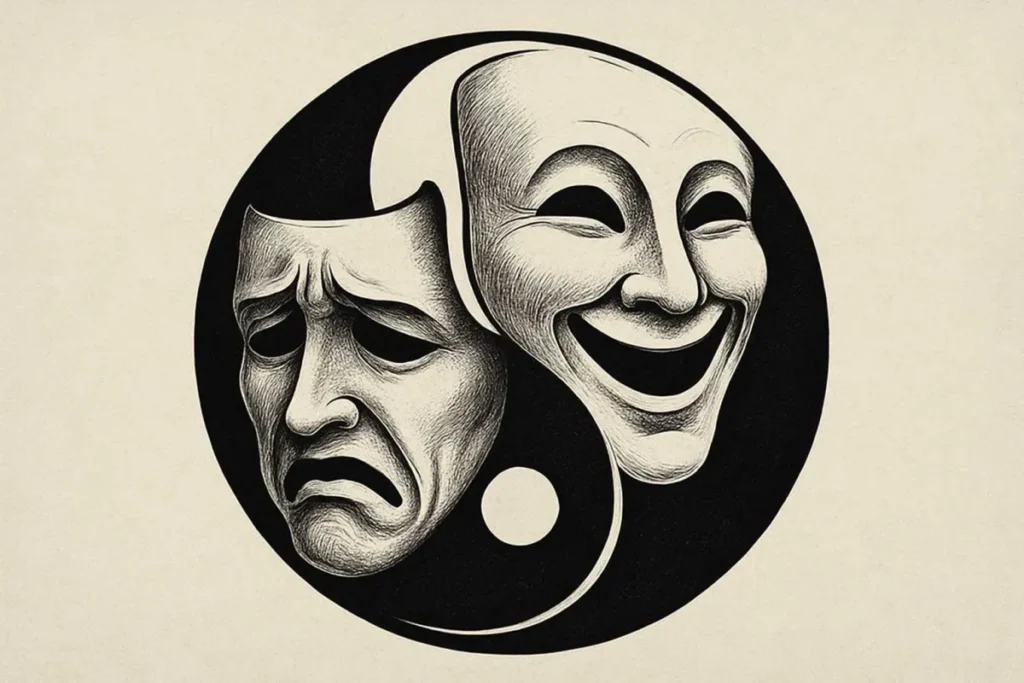
What people my age secretly know but rarely say out loud is this: life is messy. Being human is messy. Living life is a distinctly untidy business.
We strive, and we reach, and we stretch ourselves to be and have and do. Yet, we fall short.
Like that old image: there are two dogs inside us, and which one wins depends mostly on which one we feed. We’re a mix of divine and devilish impulses.
Even if we seek to pursue our higher angels, we never fully escape the gravitational pull of survival that makes us selfish and self-preserving.
It’s easier to see the mixture in others than in ourselves. We see clearly that other people are neither wholly good nor wholly bad. Yes, some seem evil incarnate, others saintly.
But the truth? We’re all snakes with wings. We know what it is to live in the sublime—to be loving, kind, beautiful—and we know what it is to be abased, ugly, crude, harmful.
And though we may strive to feed the good dog, we delude ourselves into thinking we have, or soon will, reach some pinnacle of perfection, free of all corruption.
Any virtue we think we possess—integrity, authenticity, courage, leadership—is (in practice) an imperfect expression of an ideal. These virtues aren’t destinations. They’re mountains with no tops, journeys with no arrival, no finality.
We know we won’t have all we desire, nor do all we dream of doing. Even as countless things clamor for our attention—bright and shiny things that once looked lovely, we’re not going to have it all or do it all.
Life is about making choices day by day, and finding peace in the midst of the mess and the incompletions we’ll ultimately leave behind.
In this human world, we will all experience disappointment and even betrayal. We don’t give up, because life is an ongoing process of discovering—often rediscovering—the beauty, wonder, and gloriousness of being alive. Each day, there’s something new to be revealed, unconcealed.
We know that very little really matters. Love matters. In our lifetime, even our most noble aspirations will fall short, but acts of love and compassion are seeds that will take root and bless future generations. As someone has said, “Only God can count the apples in one seed.”
What people my age secretly know but rarely say out loud is that there’s mercy, grace, and redemption mysteriously woven into the fabric of the whole universe. Love covers a multitude of sins and ultimately endures. So in the midst of that eternal love, we dwell in beauty and goodness and peace.
That’s what we know to be true.
Shine,

Subscribe to the Newsletter
Join Max J Miller Blog and receive new online content directly in your inbox.
Recommended for Your Journey
Discover more inspiring reads that support your journey toward growth, purpose, and emotional well-being.

[014] – You’re Not Lost, Just Waiting to Be Brave
- Max J Miller
[012] – Why I’m grateful for my 20-year detour
- Max J Miller

[002] – The Surprising Seed of Wisdom
- Max J Miller

[009] – Redemption in a Story
- Max J Miller

[022] – Thriving in Our Third Act: The Aspirations Series Begins
- Max J Miller

[044] The Finish-Line Fallacy
- Max J Miller