
Story #008
Charlie Hustle, Street Theater, and the Soul of Story

Max J Miller

Charlie Hustle, Street Theater, and the Soul of Story
“That’s a bit like asking a fish when it first started swimming in water,” I told the podcast host who had just asked me when storytelling became the golden thread of my life.
She laughed, but her question lingered with me long after the microphones were turned off. How does one pinpoint the moment they fell in love with something that has always felt as natural as breathing?
I truly don’t remember a time when story wasn’t the element I lived in.
But after the podcast ended, the question lingered. I found myself tracing that golden thread back through the years.
Some of my earliest, happiest memories are of my mom reading to me and my brother at bedtime. Harold and the Purple Crayon. The Little Engine That Could. The Tale of Peter Rabbit.
I drank in those stories as if they were lullabies from another world.

Then, on one birthday, a gift arrived from my aunt. It was book-shaped, and I could already feel the excitement bubbling. I peeled off the paper to find Where the Wild Things Are by Maurice Sendak.
The wild rumpus began right then and there. The illustrations captivated me. But the real thrill? The boy’s name was Max. My name. That never happened.
I read it again and again, like a prayer.
While stories captivated my imagination, the actual act of reading them myself was like trying to capture lightning in a bottle. Words danced across the page, refusing to stay put. This mysterious barrier between me and the printed word—whether an undiagnosed learning condition or simply my restless creative mind—pushed me toward different storytelling mediums.
I poured myself into ventriloquism, mimicking how legendary Edgar Bergen reacted to tall tales spun by his dapper dummy, Charlie McCarthy. My act was rough around the edges, but the spark of story was woven throughout with humor, humanity, and surprise.
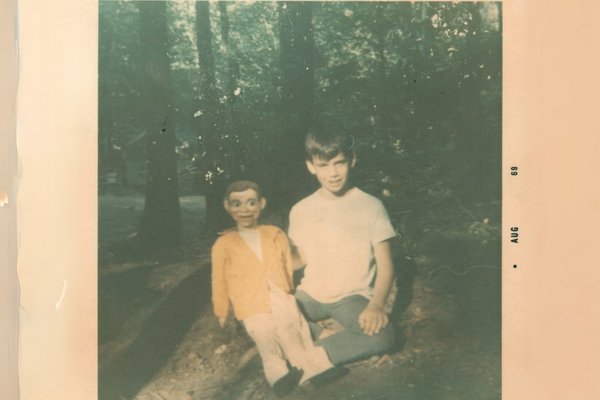
Ventriloquism gave me magical freedom to express myself without fear of judgment. It’s what illusionists call misdirection. With all eyes on the zany dummy, I escape the spotlight.
Then came television: our first set, a 13-inch black-and-white portable. I was hooked. Bonanza, Lassie, Andy Griffith, The Flintstones. And the spookier ones: The Twilight Zone, Star Trek.
My dad would wait until I was utterly absorbed, then sneak up behind me and scare me silly. I still flinch when I think about that Star Trek creature with the suction-cup fingers.
In high school, I began reading again—slowly. Teachers introduced me to Walden, Bless the Beasts and the Children, and Great Expectations. Shakespeare, too: Hamlet, The Merchant of Venice.
But it wasn’t until my Scouting mentor, James Chandler, urged me to use stories in my speeches that I began to see storytelling as something more than entertainment—it was influence. Connection. Leadership.
I never felt polished like James or other speakers I admired, but somehow, story carried me. It worked. I won successive elections in Scouting’s honor tribe, The Order of the Arrow.
My real “Master’s in Storytelling” came on the streets, in a troupe called SAK Theater. You may have read about it in a past issue of The Wisdom Wayfinder. (Issue [006])
What I didn’t share was how dazzling the talent was. SAK was like the Juilliard of storytelling street theater. Many of my castmates went on to success in improv, Broadway, television, and film. I often felt like the least gifted among them.
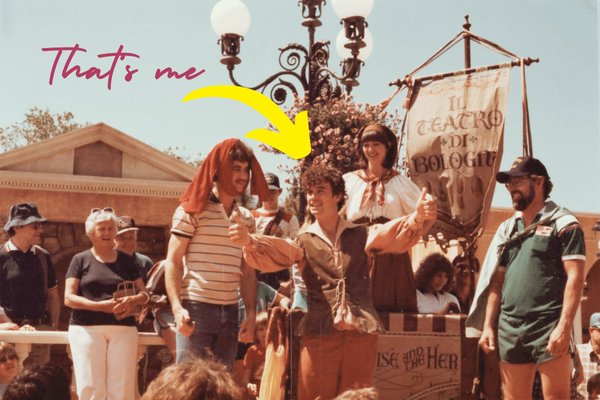
But street theater doesn’t let you fake it. The audience gives you feedback immediately: you feel their delight, confusion, and boredom (they’re free to walk away at any moment). You learn fast. And after more than 3,000 shows, I may not have had a diploma, but I had something better: Story in my bones.
I kept going. Sometimes discouraged. Often comparing myself. Then I heard a story that stuck with me.
Pete Rose—yes, that Pete Rose—once gave a raw, vulnerable interview. After finally coming to terms with the gambling scandal that ended his career, he shared this:
“They called me Charlie Hustle because I had to outwork everyone. I wasn’t a natural. I had to earn every skill through discipline and grit. That made me a better player. And it made me a better coach.”
That story unlocked something in me.
I wasn’t born a master storyteller. I became one the scrappy way—through curiosity, practice, repetition, failure, and love for the craft.
Now, as an Imagineer-turned-ghostwriter and mentor, I see how that golden thread has prepared me for my truest calling yet: Helping the hidden sages of our society tell their untold stories before they vanish. Helping them shape meaning from memory and pass it on.
I may have started like a fish swimming blindly in water. But now I know what I’m swimming in. And I help others find the water they’ve been in all along.
When discouragement creeps in—as it does—I remind myself of something a cartoonist once said:
“The master has failed more times than the beginner has even tried.” — Stephen McCranie
Storytelling isn’t just something I do. It’s the lens through which I see the world. From a little boy enchanted by a wild rumpus on the page, to a street performer holding audiences spellbound, to now helping others preserve their wisdom—I’ve come to understand that we are all, in essence, stories in progress.
When the podcast host asked about the golden thread of storytelling in my life, perhaps I should have said: “I didn’t find storytelling. Storytelling found me, and has never let me go.”

Make ‘em Laugh, Make ‘em Cry, Make ‘em Cheer
If you’ve ever considered sharing your life experiences and lessons with others, your brain has probably served up one of these delicious doubt sandwiches:
“My family insists I should write a book about my life, presumably because they’re tired of hearing the same stories at Thanksgiving.”
“I’ve had so many rich experiences that my life resembles a buffet where someone knocked over all the food trays. Where’s the pattern here?”
“What would make my ordinary life story compelling enough for readers who have Netflix as competition?”
“My writing skills peaked with angry emails to my cable company. How do I make this entertaining?”
If you’re nodding, you’re in good company. As a ghostwriter for nearly two decades, I’ve heard these “roadblock” statements more often than baristas hear “just a little room for cream.” Let me clear these hurdles from your path once and for all.
First, breathe a sigh of relief: you don’t have to write War and Peace. Instead of one long narrative, I recommend starting with a collection of short stories about your most meaningful experiences—literary tapas, if you will.
In case you missed it, that’s precisely what I’m doing with the first section of every edition of The Wisdom Wayfinder. “In Search of…My Wisdom Legacy” is me “eating my own dog food” (tech-bro speak for “I’m not asking you to do anything I wouldn’t do myself”).
Next, before tackling any particular story, compile a list of your life’s memorable moments. This gives you a treasure chest of ideas to raid when inspiration goes on vacation.
Simply reflect on your life and ask, “What have been my turning points, greatest challenges, and moments that either kept me up at night or made me wake up smiling?” No need for chronological order—your memories don’t file themselves neatly by date, so why should your writing process?
When you’re ready to write, pick one episode with dramatic potential. Think of it as selecting which embarrassing story you’d tell on a late-night talk show.
Two emotional elements make readers stick to your story like eyes on a car wreck. The first is aspiration: what were you longing for at the time? Was it love, recognition, success, friendship, meaning? It’s sometimes helpful to ask, “What did I want?” followed by, “Why did I want that?” Repeat the why question until you feel something.
The second emotional element is struggle. What hurdles did you face that made Olympic steeplechasers look like they had it easy? What skills did you have to learn? What internal turmoil did you experience? Were you afraid, embarrassed, or convinced the universe had a personal vendetta against you? The more authentic you are about your external and internal challenges, the more your audience will think, “This person has been reading my diary.”
Aspiration and struggle make stories universally appealing because they’re the elements of life that give rise to our emotions (and sometimes our stress-eating habits).
Don’t overcomplicate the process. You don’t need to read a library of books on the 28 stages of the hero’s journey (spoiler alert: stages 15-19 are just variations on “the hero is having a really bad day”).
Consider the annual competition for the best complete story containing six words or fewer. Ernest Hemingway wrote a famous six-word heartbreaker in the form of a classified ad:

Emotional, right? You feel both the aspiration (having a child) and the heartbreaking struggle of loss. Six words, and suddenly you’re reaching for tissues.
My last piece of advice for documenting your untold story is to avoid trying to be clever or creative. Instead, be courageous and vulnerable. Readers can smell inauthenticity like dogs can smell fear.
This process can be like peeling layers of an onion—there’s always a deeper layer to reveal. And yes, sometimes you cry. But unlike onion-chopping, these tears are worth it.
If ever a journey is its own reward, mining the gold of your life experiences deserves double frequent flyer miles. Your wisdom legacy isn’t just for others—it’s the greatest gift you can give yourself.
Happy mining! And remember, no hard hat required—just an open heart and perhaps a sense of humor about your past fashion choices.

Stories Are For Children?
Somewhere along the way, a peculiar notion crept into adult life: that stories are for bedtime, fairy tales, and animated musicals with talking snowmen. Once we hit a certain age or get promoted to middle management, we’re supposed to swap stories for spreadsheets, emotions for bullet points, and wonder for quarterly projections.
But let’s be honest: has a PowerPoint chart ever made you cry?
Despite our insistence that we are rational beings, walking calculators of logic and reason, the truth is this: stories are the operating system of the human mind.
Stories are how we remember, how we relate, how we decide. We don’t gather around the fire to exchange bar graphs. We do it to share tales of love, loss, failure, and triumph.
Think about it: every great movement, every cultural shift, every legacy ever left behind started with a story. From cave paintings to TED Talks, sacred texts to sitcoms, stories carry our values across generations like emotional FedEx packages.
Want to teach a kid to be brave? Tell them a story.
Want to move an audience? Tell a story.
Want to win hearts, change minds, or sell someone a $5 cup of coffee with oat milk and a swirl of nostalgia? Yep—tell a story.
As the saying goes, “Facts tell, but stories sell.”
So let’s stop pretending grown-ups outgrow storytelling.
The truth is, we grow into it.
“Stories are for children”?
That’s an idea worth shredding

P.S. If you’d like to mine the gold of your life experience with a bit of support, click the purple “Storytelling Waitlist” button below to be notified of my next workshop.
P.P.S. Who in your world really should capture their life stories? Please forward this Wayfinder edition (email) to them.
P.P.P.S. If you’re intrigued with the idea of sharing your life lessons with future generations, what holds you back? Please, hit reply, and tell me your thoughts and concerns.
Subscribe to the Newsletter
Join Max J Miller Blog and receive new online content directly in your inbox.
Recommended for Your Journey
Discover more inspiring reads that support your journey toward growth, purpose, and emotional well-being.
[035] Standing Outside the Window: When Spiritual Love Turns Hollow
- Max J Miller

[027] Aliveness: The Fourth Aspiration for a Thriving Third Act
- Max J Miller

[016] – Unretire Your Soul
- Max J Miller

[037] Did I throw the baby Jesus out with the baptism water?
- Max J Miller
[003] – Question Everything
- Max J Miller
[026] Celebrating Six Months of The Wisdom Wayfinder!
- Max J Miller